


Introduction
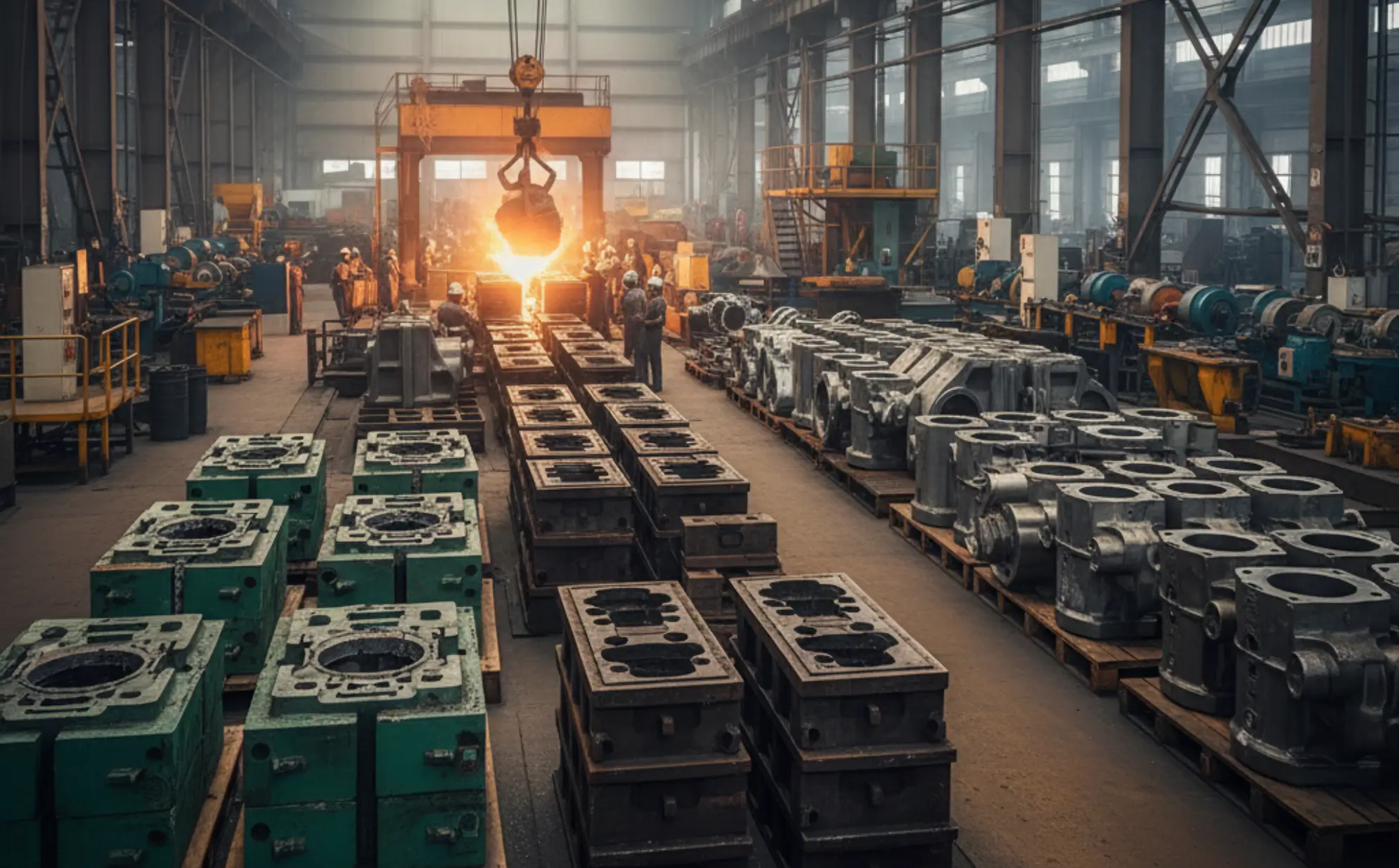
Sand Casting for Large Components is often the go-to solution when industries face the challenge of producing heavy, complex parts without breaking the budget. As a manufacturer, I have seen firsthand how the right process can save time, reduce material waste, and ensure durability for industrial machinery. And for OEMs, getting this decision right can mean the difference between smooth production and constant delays.
When I first started working with large pump housings and agricultural machinery components, I remember a client who was struggling with solid machining. They were trying to mill a 500 kg component from a solid block. The material cost alone was staggering, and the machining hours were eating their schedule. That’s when we suggested sand casting. And just like that, they saved significant costs while maintaining the performance they needed.
Why Large Components Require a Special Approach
Large components are not like small parts you can machine in hours. The size alone introduces challenges:
- Weight and Material Cost: A single large part can weigh hundreds of kilograms. Using solid machining can waste 60–70% of the raw material.
- Complex Shapes: Pumps, valve housings, and heavy machinery parts often have cavities, ribs, or flanges. These features are difficult and expensive to machine.
- Tolerances and Machining Allowances: Tight tolerances increase machining time and cost. And miscalculations lead to scrap or rework.
If you want a deeper understanding of the basic process before evaluating options, you can check our guide on sand casting and the sand casting process. It explains the foundational steps and considerations that make sand casting suitable for industrial applications.
When Sand Casting for Large Components Is the Most Cost-Efficient Choice
There are specific scenarios where sand casting offers clear advantages:
- High Weight Components: For parts that weigh hundreds of kilograms to several tons, sand casting reduces raw material wastage compared to machining from solid blocks.
- Complex Geometry: Near-net shapes, cavities, and flanges can be created directly in the mold, reducing post-casting machining.
- Reduced Machining: Near-net shape casting means less material to remove and shorter machining time.
- Cost-Benefit Balance: When tooling, machining, and material are considered together, sand casting often comes out ahead.
Think of it like shaping clay versus carving marble. You can mold clay into almost any shape quickly. But carving marble takes hours, careful planning, and expensive material. In the industrial world, sand casting is your clay, and solid blocks are your marble.
For those curious about heavy-duty applications, our blog on advantages of sand casting for heavy equipment explains how this process works for construction and mining machinery.
Comparing Costs: Sand Casting vs Other Methods
Here’s a simple comparison for buyers:
Then comes the pattern – the blueprint of accuracy. A good pattern saves hours of machining. A poor one adds cost and rework. We use precision patterns made with CNC tools to ensure every mold cavity is consistent.
| Fabrication | More welding → distortion → high post-machining |
| Machining from Solid | Material waste + long machining hours |
| Forging | High die cost → limited flexibility |
| Investment Casting | Not suitable for very large components → high per-part cost |
In short, sand casting hits the sweet spot for cost, flexibility, and strength when the part is large but tolerances are reasonable. You can also explore our guide on general engineering sand castings to understand how sand casting adapts to different industrial applications.
Real Industrial Applications
Some components where sand casting shines include:
- Pumps & Valve Housings: Complex internal cavities can be molded with minimal post-machining.
- Earthmoving & Construction Machinery: Heavy frames and baseplates require durable material and near-net shape design.
- Agricultural Machinery: Tractor housings, gearboxes, and harvesting equipment benefit from sand casting’s flexibility.
- Mining Equipment: Large wear-resistant parts can be cast efficiently.
- Industrial Gearbox Casings & Motor End Shields: Complex shapes and ribbed structures are easier to cast than machine.
These examples highlight real-world relevance and show buyers that sand casting is not theoretical – it is proven in practice.
What to Look for in a Foundry
When sourcing sand casting for large components, buyers need to evaluate suppliers carefully:
- Technical Expertise: Can they handle metallurgy, mold design, and shrinkage allowances?
- Large Mold Capability: Do they have the capacity for big casting boxes?
- Quality Control: Consistent sand, accurate patterns, and in-house testing. (Testing facility reference)
- Heat Treatment & Surface Finishing: Ensures durability and machinability.
- Reliability: Repeatability in larger batches without defects.
At Sunflame Technocast, we help OEMs review their designs early. This ensures components are cast efficiently and cost-effectively, reducing machining and scrap.
Ensuring Quality & Reliability
Even with the right process, quality matters:
- Dimensional Accuracy: Large parts can warp; proper pattern and mold design keeps tolerances in check.
- Material Certification: Metallurgical testing confirms strength and durability.
- Inspection & Testing: Visual, dimensional, and mechanical testing ensures repeatable results.
For large industrial components, reliability is non-negotiable. That’s why we follow stringent quality processes across all projects. You can see more about our Duplex Stainless Steel casting solutions for industries requiring high performance.
Conclusion
Choosing the right manufacturing method for large components can save time, money, and material. Sand casting is most cost-effective when parts are heavy, complex, and produced in volumes. It minimizes material waste, reduces machining, and provides strong, durable parts.
For OEMs looking for reliable solutions, reviewing supplier capabilities is crucial. And when done right, Sand Casting for Large Components offers a balance of cost, quality, and performance.
Learn more about how we handle large sand casting projects at Sunflame Technocast.
Contact us for more information.

