


Introduction
Industrial valves work in tough conditions. They handle pressure, heat, and corrosive media. So the casting behind each valve must be accurate and reliable. Shell Mold Casting for Industrial Valve Components gives tight tolerances, a good surface finish, and repeatable results. This guide tells buyers what to check and how to pick the right foundry.
Sunflame Technocast has produced sand and shell mold castings for valves, pumps, and other industrial parts. If you want more on their approach, see Sunflame’s page about why OEMs trust them as pump and valve sand casting manufacturers.
What Is Shell Mold Casting for Industrial Valve Components?
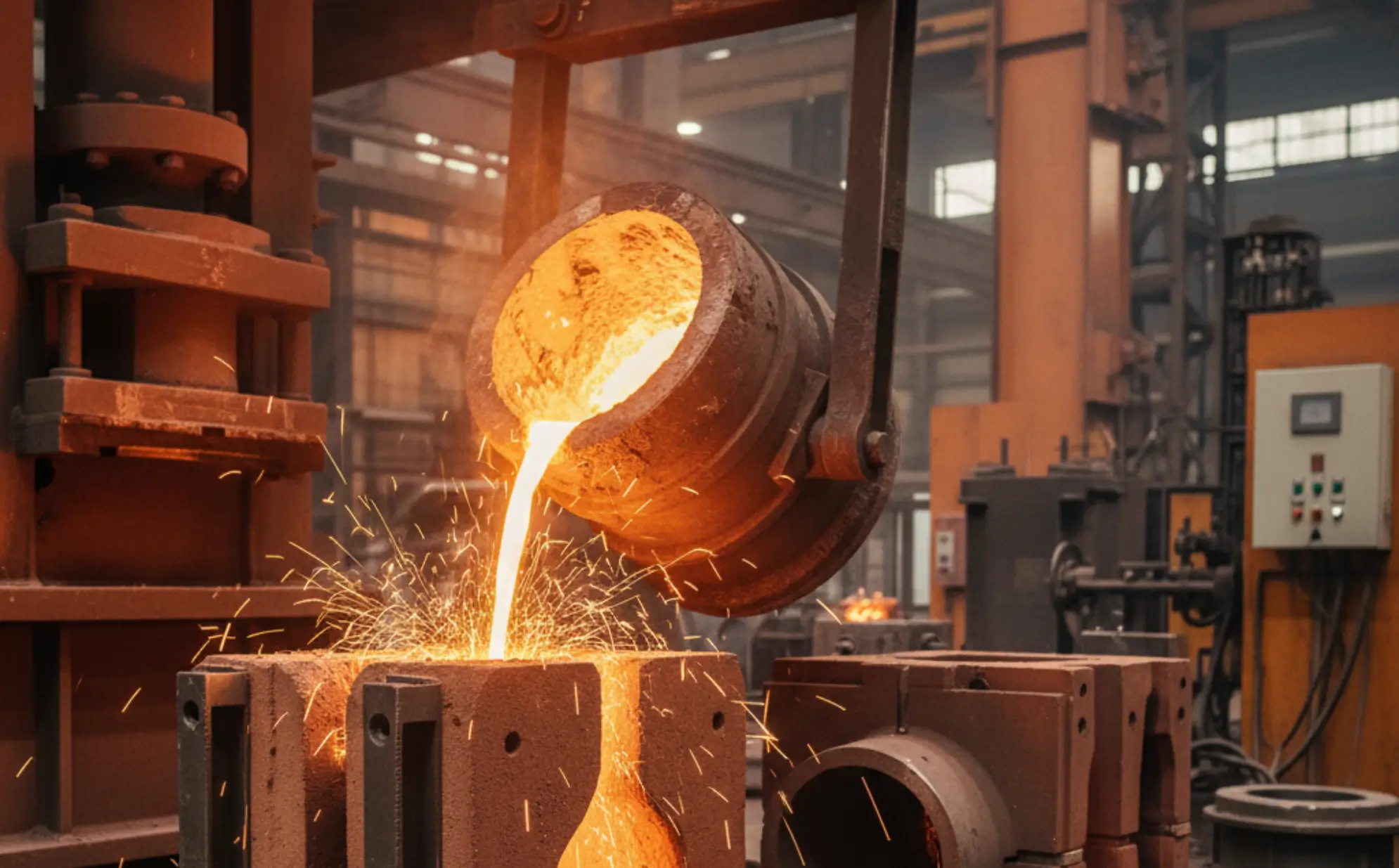
Shell mold casting is a casting method that uses a heated metal pattern and resin-coated sand. The sand bonds into a thin shell around the pattern. That shell becomes a precise mold. If you want a step-by-step description, read Sunflame’s shell mold casting process.
Shell molding sits between full sand casting and precision machining. It gives better dimensional control than loose sand. It also reduces machining hours.
Why valve makers choose shell molding
- Tight, repeatable dimensions.
- Smooth casting surface.
- Good for thin walls and complex shapes.
- Works with stainless and alloy steels. See Sunflame’s work on duplex stainless steel casting for alloy examples.
Why valve makers choose shell molding
Shell Mold Casting for Industrial Valve Components — core parts such as, Valve body, Bonnet, Disc / plug, Seat housings, Yoke & gland components, and Strainer bodies.
Body and bonnet often need the highest dimensional control. Disc and seat areas need clean surfaces for sealing. Shell molding fits these needs.
Shell Mold Vs Sand Casting — what to choose
Sand casting works for large, heavy parts and low-volume runs. Read more on when sand casting makes sense in Sunflame’s article on the advantages of sand casting and their post on large sand cast components.
Pick shell molding when you want less machining, tighter CT grades, and better surface finish. Pick sand casting when you need low tooling cost or very large castings.
Key checks for buyers before placing an order
I’ve worked with many valve OEMs. These are the frequent issues and how to avoid them.
- Complete drawings and 3D models. Don’t send partial sketches. Missing details cause delays.
- Specify material grade. Steam, chemical, and high-temp services need the right alloys. Refer to Sunflame’s stainless steel casting guidance.
- Declare pressure and temperature ratings. These influence gating, risers, and heat treatment.
- List required tests. Include chemical analysis, tensile tests, MPI, and radiography if needed. See Sunflame’s testing facility page for reference.
- Discuss heat treatment. Normalize or anneal if the spec calls for it.
A common mistake is choosing a foundry only on price. Price matters. But a small saving on casting can cost more in scrap, machining, and field failures.
How a good foundry runs shell molding
A proper process reduces risk. Sunflame’s typical flow is: pattern design → shell formation → assemble and pour → cooling and knockout → fettling and heat treatment → final inspection. Each step has checks. For more on their sand casting practice across industries, see their posts on sand casting process basics and how they deliver high-quality sand cast parts for industrial buyers.
I remember a valve maker who had repeated weld repairs on valve bodies. We changed the gating and improved shell thickness control. The casting porosity dropped, and repairs stopped. Small tooling and process fixes often remove big problems.
Final steps: testing and traceability
Ask for certificates, chemical reports, and NDT reports. Traceability matters. If a part fails in service, you must trace the lot, heat, and process. Sunflame documents tests and keeps records. You can review their capability on their best valve casting manufacturers page.
Conclusion
Shell molding gives repeatable accuracy and a good surface for valve parts. When you need tighter tolerances, smooth sealing surfaces, and reduced machining, choose Shell Mold Casting for Industrial Valve Components. It’s a practical choice for body, bonnet, disc, and other precision parts.
Need Shell Mold Casting for Industrial Valve Components? Contact Sunflame Technocast Pvt Ltd for precise and stable shell mold valve parts.

