


- 0 Comments
- By sunflameadmin
- Latest News
- 32 Likes
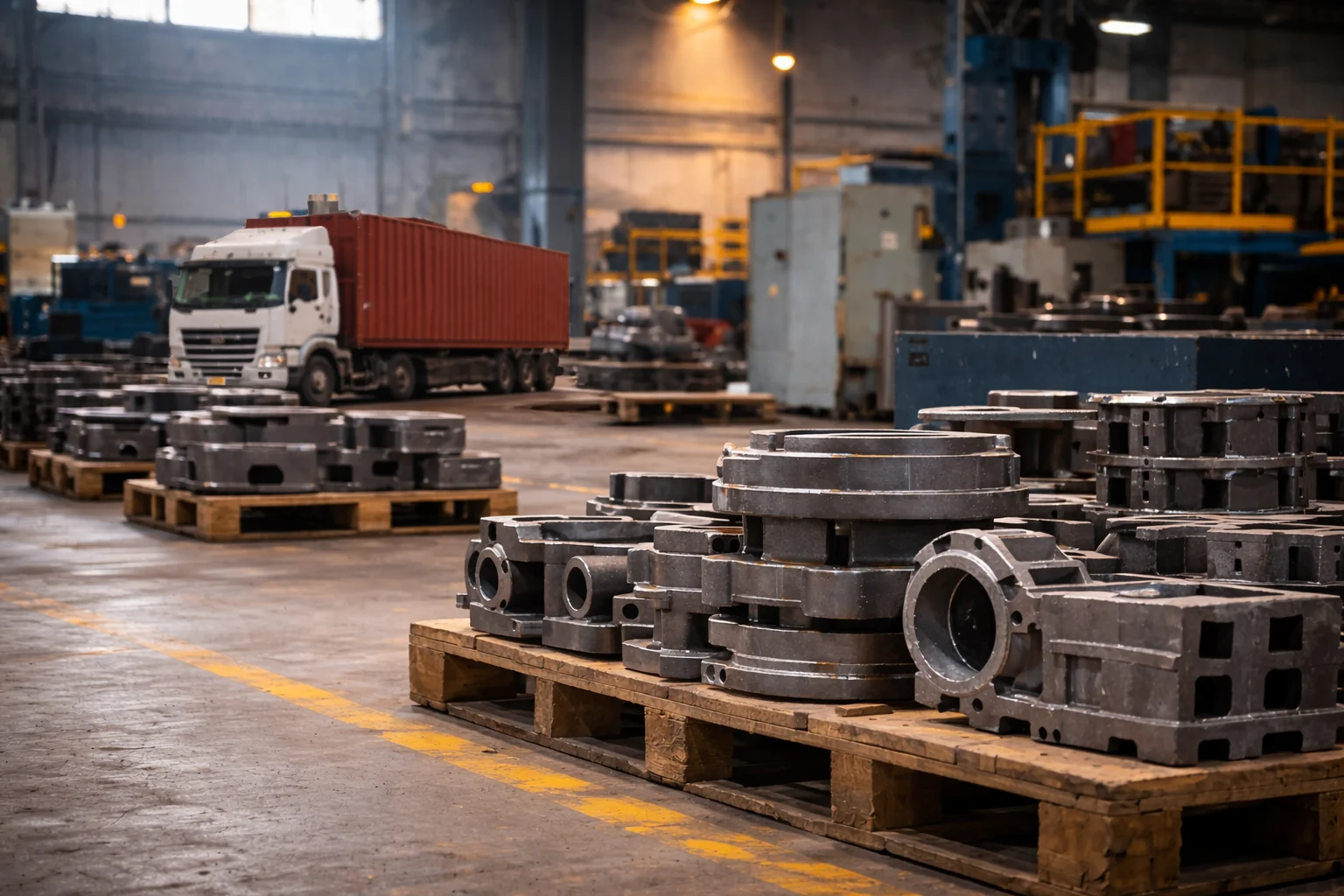
The global manufacturing landscape is evolving rapidly. Supply chains are being restructured, sourcing strategies are diversifying, and international buyers are actively searching for reliable and cost-efficient casting partners. In this changing environment, Iron and Steel Casting from India is gaining strong international recognition.
For decades, India was known primarily for cost advantages. However, today the story is very different. Indian foundries are investing in automation, adopting global quality standards, strengthening sustainability practices, and expanding export capabilities. As a result, India is no longer viewed merely as a low-cost supplier but as a serious global manufacturing partner.
This leads to a critical question: Is India truly emerging as a global hub for iron and steel casting?
To answer this, we must examine production strength, technological capability, export growth, quality standards, and global buyer confidence.
Growing Global Demand for Iron and Steel Casting
Iron and steel casting components are essential to modern infrastructure and industrial development. These applications are extensively supported through advanced sand casting techniques, as explained in our detailed guide on what is sand casting and the sand casting process.
The demand for Iron and Steel Casting is increasing due to:
- Rapid infrastructure development worldwide
- Expansion of automotive and electric vehicle production
- Renewable energy projects such as wind and solar
- Industrial automation and heavy engineering growth
As global demand expands, buyers are looking beyond traditional sourcing destinations. India is increasingly positioned as a strong alternative due to its scale, capability, and improving quality standards.
India’s Strong Industrial Foundation
India is one of the largest casting producers globally. The country has a vast ecosystem of organized and export-oriented foundries equipped with modern infrastructure. Over the past decade, significant modernization has taken place across the industry.
Many Indian foundries now operate with:
- Automated high-pressure molding lines
- Advanced induction and cupola furnaces
- Spectrometer-based chemical analysis systems
- CNC machining facilities
- In-house testing laboratories
These improvements have enhanced dimensional accuracy and reduced rejection rates. This strong industrial base is one of the key reasons India is gaining global attention in iron and steel casting exports.
Leadership in Iron Casting Production
India has historically been very strong in iron casting, particularly grey iron and ductile iron components. For example, the automotive sector heavily depends on precision cast parts, which you can explore in our article on sand casting for automobile components.
Proper melting temperature and metallurgical control are crucial for high-quality iron casting. Maintaining optimal temperature ensures structural strength and reduces casting defects.
Today, Indian iron casting manufacturers comply with international standards such as ASTM, DIN, and EN specifications, which strengthens their global competitiveness.
Expanding Capabilities in Steel Casting
Steel casting is more technically demanding than iron casting due to higher melting temperatures and stricter metallurgical requirements. Indian manufacturers have significantly upgraded their processes to meet these challenges.
Steel casting components produced in India now serve industries such as:
- Mining and heavy equipment
- Oil and gas infrastructure
- Power generation plants
- Railway and transportation
- Industrial machinery
Advanced alloy manufacturing such as duplex stainless steel casting solutions further strengthens India’s global competitiveness in corrosion-resistant and high-performance applications.
Quality Control as a Growth Driver
Quality assurance has become a defining factor in India’s emergence as a global casting hub. Modern foundries have adopted systematic inspection and testing procedures to meet international buyer expectations.
Key quality control measures include:
- Chemical composition testing
- Tensile and hardness testing
- Microstructure analysis
- Non-destructive testing (NDT)
- Ultrasonic and radiographic inspection
These inspection systems are supported by modern infrastructure, which you can explore in detail in our blog about quality control systems and testing facilities at Sunflame Technocast.
Improved quality systems have significantly increased buyer trust and repeat export orders.
Surface Finish and Precision Engineering
Today’s global market demands precision, consistency, and superior surface quality. Indian manufacturers have adapted by investing in advanced finishing processes.
Modern finishing capabilities include:
- Shot blasting and surface cleaning
- Precision grinding
- CNC machining
- Surface treatment and coating
Surface finish directly affects performance and durability. By focusing on finishing and precision, Indian foundries are moving toward high-value casting production rather than basic volume manufacturing.
Sustainability and Environmental Compliance
Sustainability has become a critical factor in global sourcing decisions. European and American buyers now require suppliers to follow responsible environmental practices.
Indian foundries are increasingly implementing:
- Energy-efficient melting furnaces
- Sand reclamation systems
- Waste heat recovery units
- Advanced dust and emission control systems
- Water recycling facilities
The broader transformation toward greener production is discussed in our article on sustainability in metal manufacturing and key green foundry strategies.
This shift toward greener production strengthens India’s position in global iron and steel casting markets.
Export Growth and Strategic Positioning
India’s casting exports have shown steady growth over the years. European countries, in particular, are increasing their sourcing from India due to cost competitiveness, supply chain diversification, and improved reliability.
Reasons global buyers prefer Indian iron and steel casting suppliers include:
- Competitive pricing with quality consistency
- Strong engineering support
- Flexible production volumes
- Compliance with global standards
- Growing focus on sustainability
For deeper insights into this export trend, you can read Why Europe Is Increasingly Importing Castings From India.
Export growth is one of the clearest indicators that India is transitioning from a regional supplier to a global casting hub.
Challenges and Opportunities Ahead
Despite strong growth, India still faces certain challenges such as logistics efficiency, freight cost fluctuations, and raw material price volatility. However, continuous infrastructure development and port modernization are gradually improving export efficiency.
Looking ahead, the demand for Iron and Steel Casting is expected to increase significantly in sectors such as electric vehicles, renewable energy infrastructure, railway expansion, and smart city development. As global buyers continue to diversify sourcing, India is well-positioned to capture a larger share of the international casting market.
Conclusion
India is steadily establishing itself as a global hub for Iron and Steel Casting. The country’s combination of strong production capacity, technological advancement, improved quality control, sustainability initiatives, and expanding export markets has reshaped its global image.
What was once considered primarily a cost-driven destination is now recognized as a value-driven manufacturing partner. While there is still room for further growth and optimization, the trajectory clearly indicates that India is moving toward becoming a central player in the global iron and steel casting industry.
For international buyers seeking reliability, scalability, and competitive advantage, India is no longer just an alternative — it is increasingly becoming the preferred choice.
Contact Us for more information:
📞 +91 99248 11655
📧 info@sunflametechnocast.com

