


- 0 Comments
- By sunflameadmin
- Latest News
- 29 Likes
Introduction
The technical aspect of decision-making is only one of the factors on which the selection of the casting process depends—it directly influences the cost of production, the time for delivery, and the performance of the component throughout its lifetime. Why You Should Choose Shell Molding becomes an important consideration, as shell molding and investment casting are often compared because both offer higher precision than traditional sand casting.
For most automotive, pump, valve, agricultural, and general engineering components, shell molding delivers a stronger balance between accuracy, strength, scalability, and cost. This preference becomes even clearer when you understand how shell molding fits into modern industrial supply chains built around reliable sand casting processes.
This article explains why you should choose shell molding when practical manufacturing efficiency matters more than cosmetic perfection
How Shell Molding and Investment Casting Differ in Practice
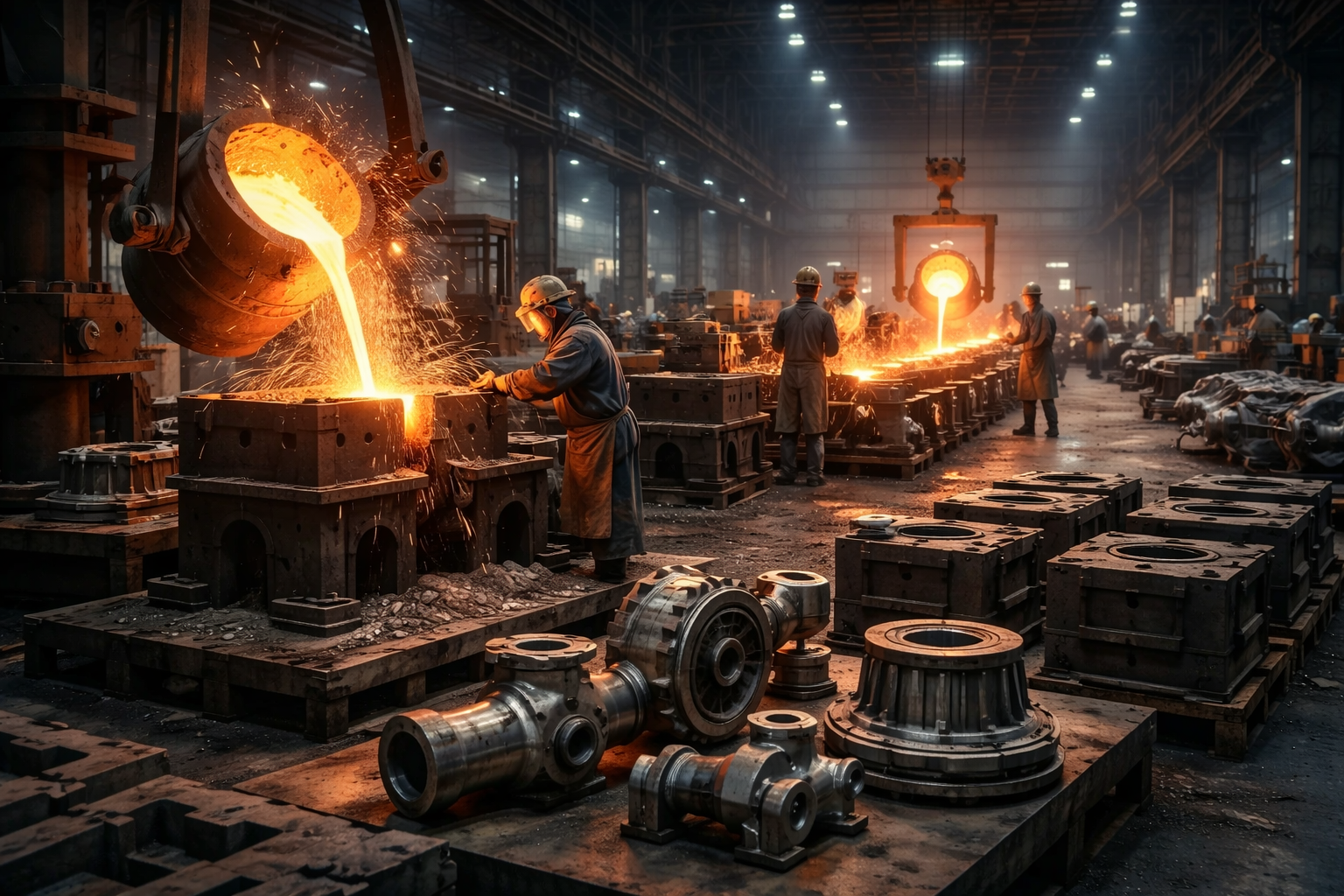
Shell molding is a refined form of sand casting where resin-coated sand forms a thin, rigid shell over a heated metal pattern. This controlled approach improves surface finish and dimensional consistency compared to conventional Shell Casting Process.
On the other hand, investment casting uses wax patterns and ceramic shells. Although it works with very intricate and delicate shapes, the multi-step process makes it slower, costlier, and less easy to win the industrial volume.
In practical manufacturing environments, shell molding integrates more smoothly with industrial sand casting operations already used by OEM suppliers.
Why You Should Choose Shell Molding for Cost-Effective Manufacturing
Cost efficiency is one of the strongest reasons why you should choose shell molding. Tooling used in shell molding is reusable, durable, and ideal for repeat production.
For industries producing Sand Casting for Pump and Valve Components, this cost stability becomes critical.
Per-unit cost of investment casting increases because of the wax pattern and the ceramic shell consumed, and hence it is too expensive for cost-sensitive OEM programs as the volumes go up.
Shorter Production Time Without Losing Accuracy
Shell molding significantly reduces production lead time by removing wax pattern creation, ceramic shell drying, and burnout stages.
This advantage is especially valuable in sectors like:
- Automotive component manufacturing
- Agricultural equipment production
- Heavy engineering supply chains
OEMs supplying the automobile sector often rely on shell molding to maintain both speed and consistency.
Accuracy That Fulfil Industrial Demands
Shell molding imparts to the parts dimensional reliability, and thus it is suitable for those components that need to be made within certain tolerances but without the use of very complicated shapes.
This level of precision is widely accepted across general engineering sand castings, where performance and repeatability matter more than cosmetic detail.
Investment casting may achieve finer details, but shell molding meets industrial accuracy standards at a far more practical cost.
Strength and Durability Where It Actually Matters
Another main factor in support of the choice of shell molding is the mechanical reliability. Shell molded parts possess a powerful internal structure which makes them fit for use in applications where they will be under load or subjected to pressure.
This is why shell molding is commonly used in:
- Valve bodies
- Pump housings
- Structural automotive parts
- Heavy-duty agricultural machinery
For demanding environments, shell molding aligns well with the durability expectations seen in Sand Casting for Heavy Equipment applications.
Scalable Production for OEM Supply Chains
Shell molding supports consistent, repeatable production—an essential requirement for OEM contracts. Once the process is stabilised, quality variation is minimal across large batches.
One of the factors contributing to the growing trend of Indian sand casting foundries that supply global OEMs is that they increasingly prefer shell molding due to its scalability.
Meanwhile, investment casting, owing to its labor-intensive nature, is unable to provide the same long-term production stability.
Surface Finish That Combines Quality and Cost
The use of shell molding results in a smoother surface finish compared with that of traditional sand casting which reduces machining requirements and at the same time keeps costs within limits.
For industrial buyers focused on performance over appearance, this balance makes shell molding the more practical choice over investment casting.
When Investment Casting Still Makes Sense
Investment casting remains relevant when:
- Extremely complex geometries are required
- Very thin wall sections are unavoidable
- Aesthetic detail outweighs cost concerns
On the other hand, shell molding has higher worth with fewer disadvantages in most industrial applications.
Final Thoughts
The choice is not which casting process is more advanced but rather which one gives better results under actual production conditions.
The choice of shell molding becomes evident when you require accuracy that can always be relied on, mechanical strength, costs that can be predicted and production that can be expanded.
Contact Us for more information:
📞 +91 99248 11655
📧 info@sunflametechnocast.com

