


- 0 Comments
- By sunflameadmin
- Latest News
- 37 Likes
In today’s manufacturing, precision is kind of everything. Sectors like auto parts, pumps and valves, agriculture, heavy engineering, and industrial machinery all want components that stay at the same size and also deliver steady behavior over time.
Shell mould casting is often picked because it gives excellent dimensional control, a cleaner outer surface, and it usually cuts down the time spent on machining.
As industrial needs get more advanced, builders are leaning more and more toward shell mould casting for making intricate, high-precision components. So in this blog we look at why shell mould casting still feels like an ideal solution for precision industrial manufacturing.
What Is Shell Mould Casting?
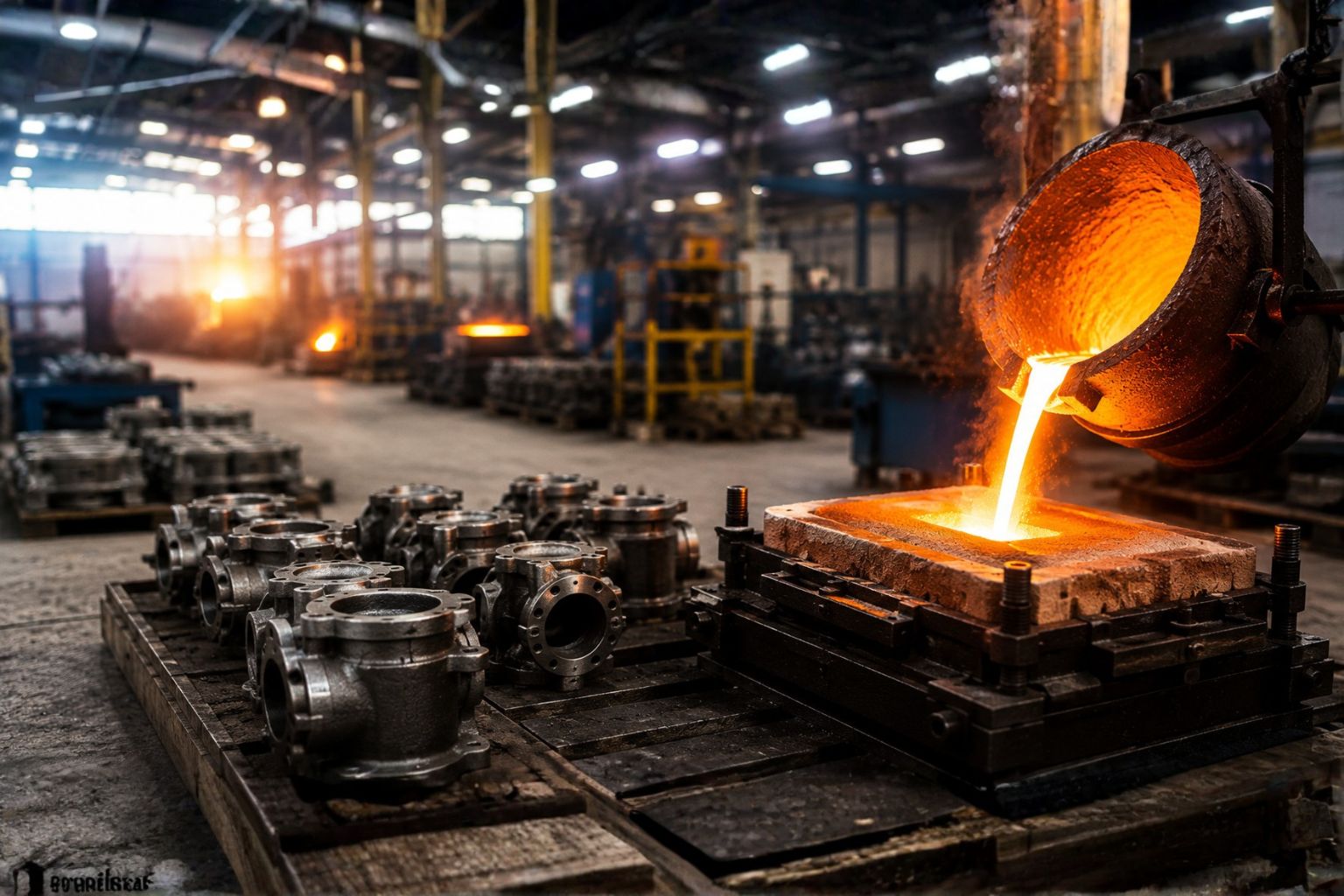
Shell mould casting itself is a metal casting process that uses a thin shell, made from resin-coated sand, to form the mould cavity. The shell is formed by heating a metal pattern, then applying specially prepared sand combined with thermosetting resin.
After that material hardens, the shell halves get put together to build the mould. Then molten metal is poured into it.
Compared to conventional sand casting, shell mould casting offers:
- Better dimensional accuracy
- Improved surface finish
- Higher production consistency
- Reduced post-casting machining
- Greater suitability for complex shapes
If you’re new to this, you can also check our detailed guide on What Is Shell Mould Casting and the Shell Casting Process. It explains the manufacturing approach in more depth, and, yeah, it’s pretty helpful.
Why Precision Matters in Industrial Components
Industrial parts often work in tough environments, where even small dimensional swings can cause performance issues.
Precision becomes especially important in:
- Valve bodies and pump housings
- Automotive components
- Agricultural machinery parts
- Engineering equipment
- Hydraulic and pneumatic systems
If the dimensional accuracy isn’t good, you can end up with assembly headaches, faster wear, leakage, vibration, and a noticeably shorter service life. That’s why many manufacturers now prefer shell mould casting in applications where consistency really matters.
Pumps, valves, and heavy engineering especially lean on precision castings, because they help ensure smooth operation and a longer service life, without all the drama.
Superior Dimensional Accuracy
One of the top benefits of shell mould casting is that it can reach excellent dimensional precision.
The rigid shell mould also offers better steadiness during the pouring step, compared with classic sand moulds. As a result, castings maintain their intended shape with minimal variation.
Benefits include:
- Consistent part dimensions
- Improved repeatability
- Better fit during assembly
- Reduced tolerance-related defects
For industries making high-volume components, this kind of accuracy really helps reduce production hassles and supports better overall product quality.
Plus keeping tight tolerances means fewer machining phases, so manufacturers can run a more efficient workflow across the entire production cycle.
Excellent Surface Finish
Surface finish matters too, not only for looks, but for real performance.
The fine resin-coated sand used in shell mould casting builds smoother mould faces, which leads to castings with noticeably improved finishes over conventional casting approaches.
Advantages of improved surface finish include:
- Reduced machining requirements
- Lower finishing costs
- Better coating adhesion
- Enhanced component appearance
This is particularly beneficial for industrial valve and pump components where surface quality directly impacts functionality.
Our article on Shell Mould Casting for Industrial Valve Components also highlights how surface finish contributes to product performance in demanding applications.
Ideal for Complex and Detailed Components
Modern industrial products often require intricate designs and complex geometries.
Shell mould casting is capable of producing:
- Thin wall sections
- Detailed contours
- Complex internal passages
- Precision engineering features
Since the mould keeps its form accurately while casting is happening, manufacturers can create shapes that would be hard, or frankly costly, with other casting methods.
That’s why shell mould casting fits well where parts must be both intricate and technically demanding.
From valve bodies and pump casings , to automotive housings and engineering parts shell mould casting helps makers churn out components that actually land on strict design goals and performance expectations.
Consistent Quality Across Production Runs
Consistency is one of those key requirements in industrial manufacturing, like really important.
And when a plant produces hundreds, or even thousands , of the same kind of pieces they need that confidence that each single item lines up with the same specifications, no surprises.
Shell mould casting provides:
- Uniform mould quality
- Stable production processes
- Reduced casting variation
- Improved repeatability
This sort of consistency supports steady quality standards and helps cut down rejection rates.
Quality control stays important for the whole manufacturing run. With advanced testing and inspection methods castings can be checked so they meet customer expectations before they are delivered , for industrial use.
Reduced Machining and Production Costs
Although shell mould casting involves specialized mould preparation, it often reduces overall production costs.
Because castings are produced closer to final dimensions, manufacturers benefit from:
- Less machining time
- Reduced material waste
- Faster production cycles
- Lower finishing costs
This combination of precision and efficiency makes shell mould casting an economical choice for many industrial applications.
Companies seeking cost-effective manufacturing solutions often compare different casting methods. Our guide on Why You Should Choose Shell Molding Over Investment Casting provides additional insight into this comparison.
The reduced need for secondary operations also allows manufacturers to improve productivity while controlling production expenses.
Applications of Shell Mould Casting in Modern Industries
Shell mould casting is also pretty flexible, so it can fit lots of different industries.
Automotive Industry
Precision engine components, housings, brackets , and transmission parts need dimensional uniformity and durability. Manufacturers lean on modern casting methods to hit demanding performance targets.
Pump and Valve Industry
Valve bodies, pump casings, impellers and flow regulation parts need a very smooth surface, plus solid dimensional precision for the whole thing to run right and efficiently.
Agricultural Equipment
For tractors, harvesters, and irrigation setups, the sturdy parts have to deal with rough field realities, day after day.
General Engineering
In industrial machines, mechanical assemblies, and load bearing structures, the precision and consistent repeatability from shell mould casting is a clear advantage, for sure.
Why Manufacturers Continue to Choose Shell Mould Casting
With the increasing pressure for tight-tolerance production, shell mould casting is getting more and more attention globally.
Manufacturers choose this process because it offers:
- High dimensional accuracy
- Excellent surface finish
- Reduced machining requirements
- Consistent production quality
- Capability for complex designs
- Improved production efficiency
As sectors ask for better output levels, shell mould casting still shows up as one of the steadier options, when it comes to making precision industrial parts.
The method blends good quality, fast workflow, and repeatability so it ends up as a go-to selection in today’s manufacturing setups.
Conclusion
Precision manufacturing requires processes that deliver accuracy, consistency, and reliability. Shell mould casting successfully meets these requirements by producing high-quality industrial components with excellent dimensional control and superior surface finish.
From automotive systems and valve related components, all the way to agricultural machinery and engineering gear, shell mould casting keeps taking a key role in modern production.
And if a company is after durable, accurate, yet cost-conscious castings, shell mould casting is still among the most trusted and practical casting processes out there, today.
Contact Us for more information:
📞 +91 99248 11655
📧 info@sunflametechnocast.com

